Geography
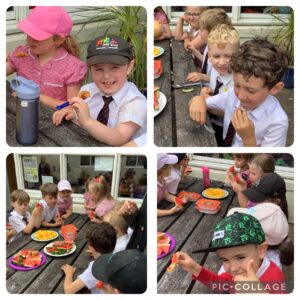
At Treloweth, geography helps children become curious, kind and connected learners who make sense of the world around them. Through exploring their local area, carrying out fieldwork and learning about different places and cultures, pupils develop a deeper understanding of people, environments and the links between them. Along the way, they gain the knowledge, skills and confidence to care for the world and play a positive role within it.
Our geography curriculum encourages children to ask questions, investigate real-world issues and make meaningful connections between people, places and environments. Through studying both physical and human geography, pupils learn how landscapes are formed, how communities develop and how human actions shape the world around them.
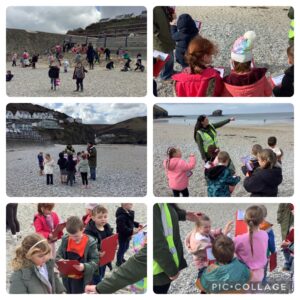
A key strength of our curriculum is the opportunity to learn from our unique Cornish setting. Regular fieldwork visits to Portreath Beach enable pupils to study coastal landscapes and identify physical and human features. Visits to nearby woodland areas provide valuable opportunities to explore forest biomes, ecosystems and habitats, helping children understand the importance of protecting natural spaces.
Children also develop a broad understanding of the wider world through the study of diverse countries, cultures and communities. By exploring how people live in different regions and countries, pupils gain a deeper appreciation of cultural diversity and develop the empathy and respect needed to be kind and considerate global citizens. Learning about contrasting locations helps children recognise the connections that link communities across the world while celebrating the uniqueness of different places and traditions.
Through the study of rivers, mountains, volcanoes and other significant physical features, pupils develop an understanding of the powerful natural processes that shape our planet. These studies encourage children to remain curious about the Earth’s wonders and to consider how geography influences the lives of people around the world.
Environmental responsibility is woven throughout geographical learning. Pupils investigate aquatic and forest biomes, climate and sustainability, exploring how human activity affects natural environments and what can be done to protect them. Through discussion, fieldwork and enquiry-based learning, children develop an understanding of environmental challenges and discover how small actions can contribute to a more sustainable future. In doing so, they become increasingly connected to the natural world and their role within it.
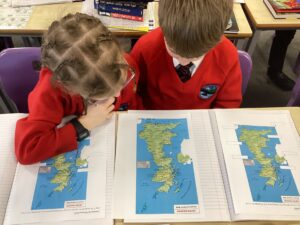
Strong geographical skills underpin all areas of learning. Children become confident users of maps, atlases and digital technologies while also developing practical navigation skills through the use of Ordnance Survey maps, compasses and grid references. These experiences help pupils interpret and understand the world around them, fostering independence, resilience and a sense of adventure.
High-quality teaching, meaningful fieldwork and opportunities to learn beyond the classroom ensure that every child sees themselves as a geographer. By exploring their local area, investigating global issues and developing essential geographical skills, pupils learn to think critically, act kindly and appreciate the complex relationships that connect people, places and environments.
At Treloweth, we believe geography is far more than the study of places. It is a way of understanding our world, our communities and our shared future. Through exploration, discovery and enquiry, pupils leave us as curious learners, kind global citizens and connected members of both their local community and the wider world, equipped with the knowledge and values to make a positive difference wherever life takes them.